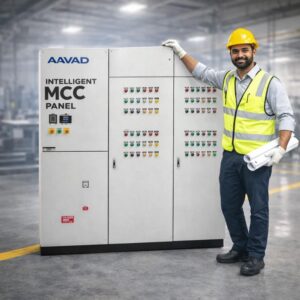
Description
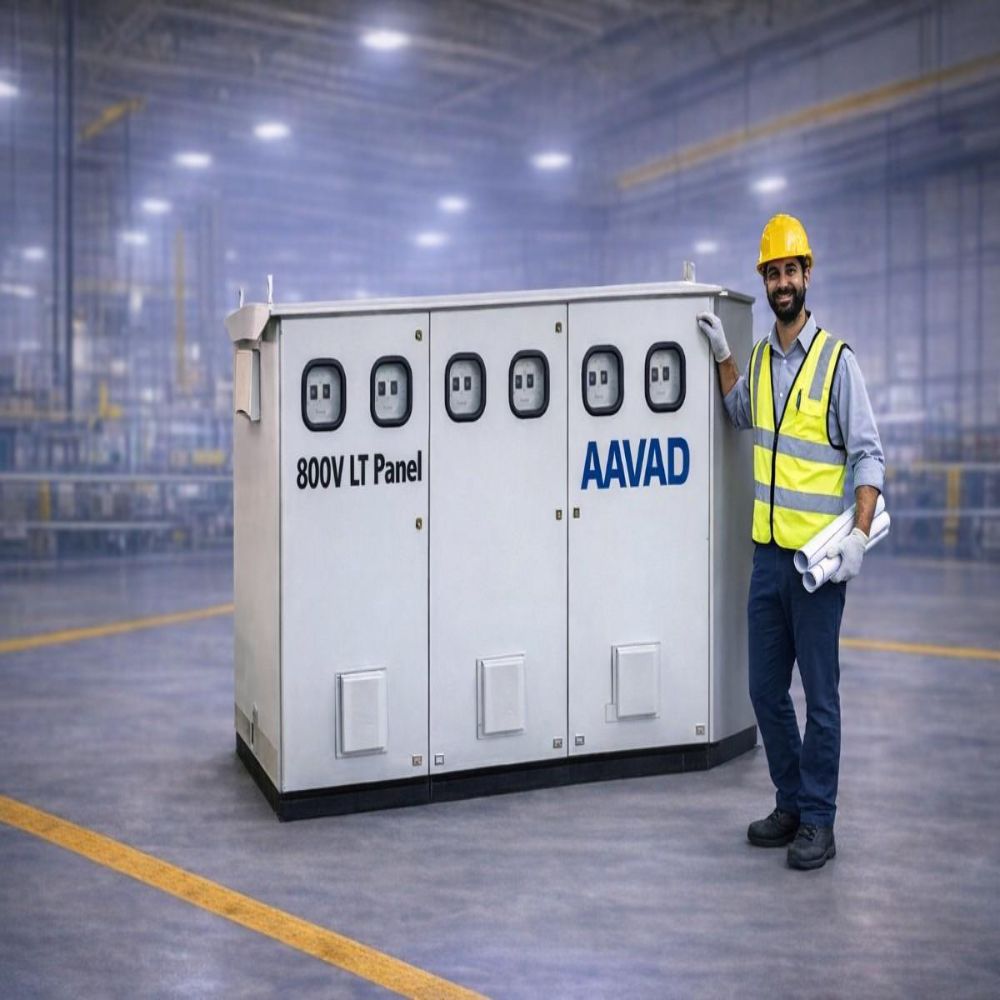
The Aavad Instrument 800V LT Panel (ACDB) represents a major technical step forward for high-capacity solar power generation. Engineered specifically for 800V AC, 50Hz, 3-wire electrical networks, this panel acts as a centralized collection point for AC power generated by modern 1500V DC string inverter architectures. By transitioning from traditional 415V networks to an 800V system, solar EPC developers significantly reduce transmission line losses and cut overall cabling expenditure.
Technical Specifications
| Feature |
Specification |
| Voltage Rating |
800V AC, 50Hz, 3-wire system |
| Application Use |
AC power collection, fault isolation, energy metering |
| Enclosure Material |
CRCA steel (2mm frame, 1.6mm partitions, 3mm supports) |
| Ingress Protection |
IP52 (Indoor), IP55 / IP65 (Outdoor) |
| Height Compliance |
≤2400mm overall, top switch ≤1750mm from floor |
| Gland Plate |
5mm aluminium / stainless steel, modular & gasketed |
| Base Frame |
75 / 100mm structural steel channels |
| Finish & Paint |
RAL7035, C5-grade coating with 9-tank anti-corrosion process |
Design & Construction Excellence
-
Heavy-duty CRCA steel enclosures
-
Optimized ventilation for thermal management
-
Outdoor-ready IP65 construction
-
Modular internal architecture
-
Designed to minimize heat rise and ensure safe operation
-
Tested for continuous operation in harsh solar environments
Compliance & Standards
AAVAD 800V LT Panels are designed and manufactured in compliance with:
-
IEC 61439 – LV switchgear assemblies
-
CPRI approval for solar applications
-
IS 8623
-
IEC 60529 (IP protection)
This ensures global acceptance, safety, and long-term reliability.
Applications
-
MW-scale solar power plants
-
Utility-scale renewable energy projects
-
High-capacity string inverter systems
-
Solar AC power collection systems
-
Grid-connected solar installations
Key Advantages
-
Reduced power losses and downtime
-
Improved system efficiency and scalability
-
Lower wiring and installation costs
-
Robust fault isolation and protection
-
SCADA-ready for remote monitoring
-
Proven performance in large solar farms
FAQs
1. Why are Solar Power Plants transitioning from 415V to 800V LT Panels?
Moving from 415V AC to 800V AC allows a solar plant to transmit the same power at a lower current. Since resistive cable losses are proportional to I²R, reducing current can significantly reduce electrical losses in AC feeders. Higher-voltage LT distribution can also help optimize AC cable sizing, voltage drop, Balance of System (BOS) costs, and overall solar plant electrical infrastructure, depending on the plant architecture.
2. Are Aavad Instrument 800V LT Panels certified for International Compliance?
Aavad Instrument 800V LT Panels are engineered for high-voltage solar AC distribution applications and can be manufactured in accordance with IEC 61439 requirements for low-voltage switchgear and controlgear assemblies. Where applicable, CPRI-tested or approved configurations can be supplied according to the project specification and selected panel design.
3. Can these Panels be deployed in Extreme Outdoor Environments?
Yes. Outdoor configurations can be supplied with protection ratings of up to IP65 and enhanced corrosion protection. A C5-grade anti-corrosive coating system can be achieved through a multi-stage chemical pretreatment process, helping protect the enclosure against rain, humidity, dust, UV exposure, and corrosive outdoor environments commonly encountered in utility-scale solar installations.
4. What is the maximum Operator Switch Height on these Panels?
The panel design maintains an overall structure height of ≤2400 mm, while the highest frequently operated switch or control device is positioned at approximately ≤1750 mm from finished floor level. This arrangement supports improved operator accessibility, ergonomic operation, inspection, and maintenance safety in accordance with the applicable project and safety requirements.