Description
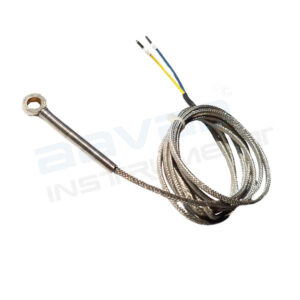
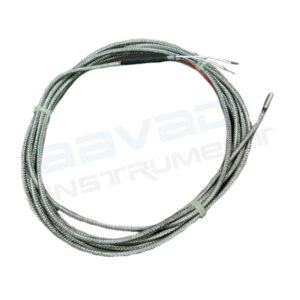
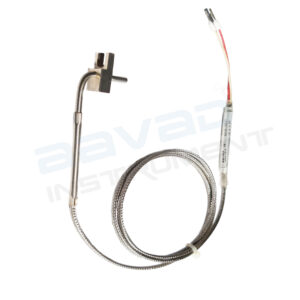
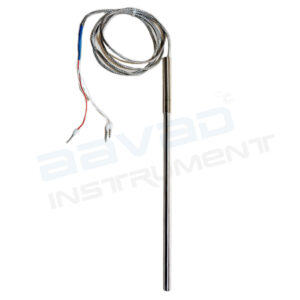
This PTFE Coated Duplex PT100 RTD Sensor features a bonded PTFE coating directly on the stainless steel sheath, providing excellent resistance to corrosive acids, alkalis, and chemical solvents while maintaining fast thermal response and a compact sensor profile. It is ideal for applications where chemical resistance and rapid temperature measurement are both important.
For applications requiring additional mechanical protection, extended immersion lengths, or flexible PTFE-sleeved construction, Aavad also offers PTFE Acid Resistant PT100 RTD Sensors with PTFE sleeve protection. These sensors are commonly used in deep chemical storage tanks, reactors, wastewater treatment plants, electroplating lines, and highly corrosive process environments where longer insertion lengths and enhanced chemical isolation are required.
👉 Explore our complete range of PTFE Sleeve RTD Sensors: PTFE Acid Resistant PT100 RTD Sensor
Key Features
-
PTFE (Teflon®) coated sheath for excellent chemical and corrosion resistance
-
Suitable for aggressive media (acids, alkalis, solvents)
-
Minimal impact on response due to direct sheath coating
-
High-accuracy RTD element (Pt100 / Pt1000)
-
Bendable, compact construction for tight or complex installations
-
Stable and repeatable measurements over time
-
Compatible with PLCs, transmitters, and control systems
-
Long service life in harsh chemical conditions
Applications
-
Chemical and petrochemical processing
-
Acid/alkali tanks, reactors, and pipelines
-
Pharmaceutical and biotech equipment
-
Water treatment and effluent plants
-
Electroplating and surface treatment lines
-
Laboratories and pilot plants
-
Corrosive process temperature monitoring
Datasheet
FAQs
1. What is a PTFE Coated Duplex PT100 RTD Sensor?
A PTFE Coated Duplex PT100 RTD Sensor is a Resistance Temperature Detector (RTD) featuring two independent PT100 sensing elements and a bonded PTFE coating on the stainless steel sheath. It provides accurate temperature measurement while protecting the sensor from corrosive chemicals, including acids, alkalis, and solvents.
2. What is the advantage of a PTFE-Coated RTD Sensor?
The bonded PTFE coating offers excellent resistance to corrosive chemicals while maintaining a fast thermal response because the coating is applied directly to the stainless steel sheath rather than using a separate protective sleeve. This design provides reliable performance in demanding industrial environments.
3. What is the difference between a PTFE-Coated RTD and a PTFE Sleeve RTD?
A PTFE-Coated RTD has a thin PTFE layer bonded directly to the stainless steel sheath, providing a compact design and faster response time. In contrast, a PTFE Sleeve RTD uses a separate PTFE sleeve that offers enhanced mechanical and chemical protection, making it ideal for longer immersion lengths and highly aggressive process environments.
4. Which industries use PTFE-Coated RTD Sensors?
PTFE-Coated Duplex PT100 RTD Sensors are widely used in chemical processing, petrochemical plants, pharmaceutical manufacturing, electroplating, wastewater treatment, biotechnology, and other industries handling corrosive chemicals, where accurate and chemical-resistant temperature measurement is essential.