Description
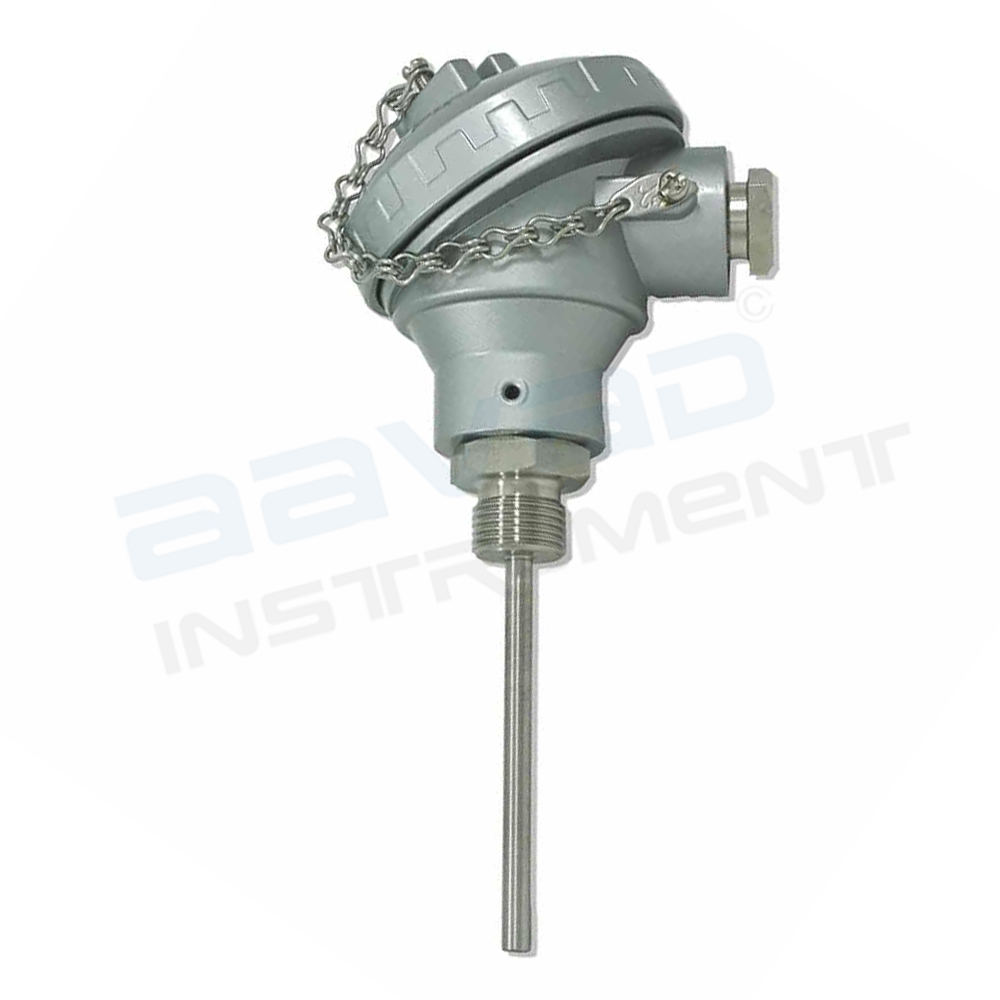
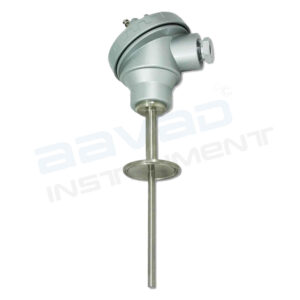
Marine Temperature Sensor (Model APID-8×75) is a Bureau Veritas certified PT100 RTD temperature sensor engineered for accurate and reliable temperature measurement in marine vessels, shipboard machinery, marine diesel engines, and offshore applications. Featuring two independent 3-wire PT100 sensing elements (3+3 wire) with Class A accuracy, a rugged 8 mm OD SS316 stainless steel sheath, and a wide operating temperature range of -50°C to +400°C, this duplex marine RTD sensor provides dependable temperature monitoring under demanding shipboard conditions. Its design supports reliable sealing under vacuum and overpressure conditions, while the fixed 1/2″ BSP(M) process connection enables straightforward installation in marine piping, engine systems, and vessel equipment.
Designed to withstand vibration, moisture, salt-air exposure, and challenging marine environments, the Model APID-8×75 features a rugged IP67 die-cast aluminium terminal head with a threaded cap and security chain for enhanced environmental protection. The duplex PT100 configuration provides two independent temperature signals from a single measurement point, enabling separate process control, indication, alarm, data logging, or redundant monitoring in critical marine systems. Manufactured by Aavad Instrument, this marine temperature sensor is suitable for shipbuilding, vessel retrofits, marine engines, fuel and lubrication systems, cooling water circuits, onboard HVAC, and offshore equipment requiring accurate and dependable Bureau Veritas certified temperature instrumentation.
Key Features
-
Bureau Veritas Certified Compliance Officially approved by Bureau Veritas to satisfy strict classification society regulatory mandates for rapid installation on commercial ships and marine vessels.
-
Dual-Pressure Sealed Architecture Engineered to deliver a secure, reliable seal under both severe vacuum forces and high-pressure process conditions without leaking.
-
Dual Element Duplex Construction Integrates two entirely independent 3-wire Pt100 platinum circuits inside a single probe to provide full automated redundancy from one mounting tapping.
-
Heavy-Duty 8 mm OD Probe Sheath Thick-walled marine-grade SS316 stainless steel probe provides structural strength against engine room vibrations and high mechanical shock loading.
-
Rugged IP67 Salt-Air Enclosure Upgraded die-cast aluminum connection head stands up to aggressive offshore marine environment corrosion, high humidity, and direct wash-downs.
-
Fixed Welded Process Connection Machined 1/2″ Male BSP fixed connection thread ensures a secure, leak-proof, and highly rigid mounting interface for rapid shipyard deployment.
-
High-Precision Class A Performance High-purity platinum elements match tight international DIN-IEC accuracy tolerances ($pm0.15^circtext{C}$ at $0^circtext{C}$) across the full -50°C to 400°C range.
-
Clean Single 3/4″ ET Cable Entry Standardized electrical conduit entry point streamlines vessel multi-conductor field wiring and maintains a clean junction terminal layout.
Applications
-
Marine Diesel Engine Temperature Monitoring Continuous thermal tracking of high-performance marine propulsion systems, exhaust manifolds, turbocharger inlets, and stationary generator blocks.
-
Fuel Oil and Lube Oil System Control High-reliability measurement inside fuel conditioning modules, lubricating oil sumps, and heavy marine oil distribution skids.
-
Cooling Water Systems on Vessels Precision temperature tracking within main engine cooling jackets, seawater intake lines, and auxiliary heat exchangers.
-
Shipboard Piping Regulatory Applications Deployment across critical liquid and gas transfer pipe networks requiring formal classification society instrumentation certification.
-
Offshore Platform and Marine Industrial Units Temperature monitoring on offshore oil platforms, floating production storage and offloading (FPSO) vessels, and coastal industrial plants.
-
Shipyard New-Build and Retrofit Projects Drop-in instrumentation for commercial vessel engineering overhauls, shipyard building contracts, and marine sensor modernization programs.
Datasheet
FAQs
1. What is a Marine Temperature Sensor and what certification does it carry?
A Marine Temperature Sensor is a screw-in PT100 Resistance Temperature Detector (RTD) designed to provide reliable temperature measurement and secure sealing under vacuum, pressure, vibration, and harsh marine operating conditions. Aavad’s Marine RTD Sensor is Bureau Veritas (BV) certified, confirming compliance with internationally recognized marine safety and quality standards for maritime applications.
2. What is the temperature range and construction of Aavad’s Marine Temperature Sensor?
Aavad’s Marine Temperature Sensor is a duplex PT100 RTD in a 3-wire + 3-wire configuration with Class A accuracy and an operating temperature range of -50°C to +400°C. It features an SS316 stainless steel sheath, compacted Magnesium Oxide (MgO) insulation, a die-cast aluminum IP67 protection head, and a 1/2″ BSP (Male) fixed process connection.
3. Why is sealing reliability important for a Marine Temperature Sensor?
Marine environments expose sensors to pressure fluctuations, vacuum conditions, vibration, humidity, and salt-laden atmospheres. A reliable screw-in process connection ensures a secure seal that helps prevent leakage, moisture ingress, and measurement drift, supporting the safe and dependable operation of marine engines, fuel systems, and onboard process equipment.
4. What applications is the Marine Temperature Sensor used for?
Marine Temperature Sensors are widely used for ship engine temperature monitoring, fuel and lubrication oil systems, cooling water circuits, onboard HVAC systems, marine process equipment, and general temperature measurement throughout the shipping and marine engineering industry.
5. Can the Marine Temperature Sensor be customized for specific vessel systems?
Yes. Aavad Instrument manufactures marine-certified RTD temperature sensors with custom probe lengths, sheath diameters, process connections, wiring configurations, and sensing elements to suit specific marine engines, fuel systems, vessel equipment, and classification society requirements.