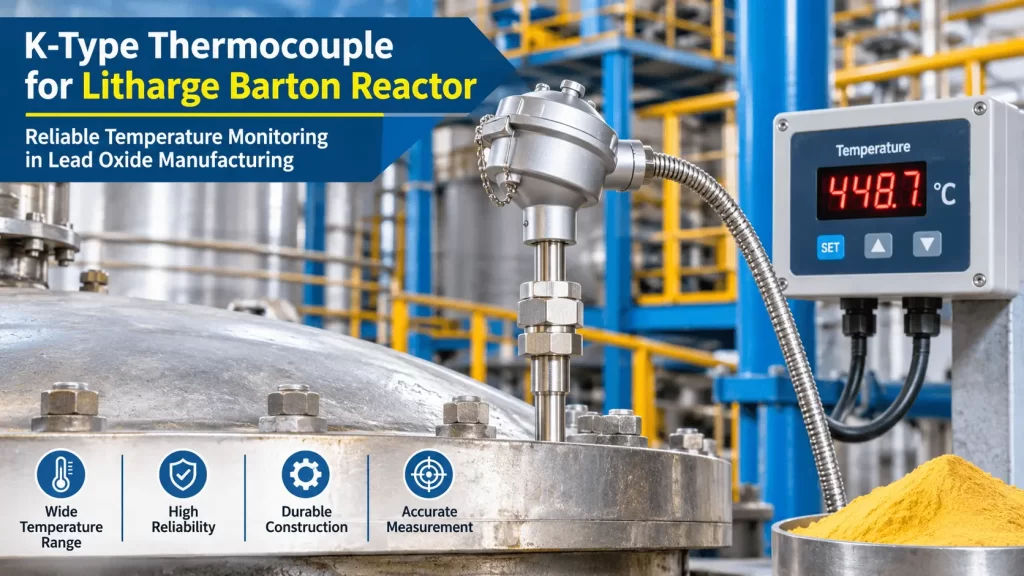
K-Type Thermocouple for Litharge Barton Reactor – Reliable Temperature Monitoring for Lead Oxide Manufacturing
In the lead oxide manufacturing industry, accurate temperature monitoring plays an important role in maintaining product quality, process stability, and operational safety. A K-Type Thermocouple for Litharge Barton Reactor is used to monitor process temperatures and provide reliable temperature feedback during lead oxide production.
Litharge Barton reactors operate under demanding industrial conditions where continuous temperature measurement is essential. Selecting the right thermocouple with suitable probe material, insertion length, sheath diameter, and temperature range helps ensure reliable performance and long service life.
This blog explains the importance, applications, selection criteria, and benefits of K-Type Thermocouples in Litharge Barton Reactor applications.
1. What Is a Litharge Barton Reactor?
A Litharge Barton Reactor is an industrial processing system used in lead oxide manufacturing. The Barton process involves the controlled oxidation of molten lead to produce lead oxide powder.
Temperature control is an important part of this process because operating conditions can influence:
-
Lead oxidation and reaction efficiency.
-
Lead oxide quality and consistency.
-
Process stability and production performance.
-
Equipment reliability and operational safety.
Accurate temperature measurement helps operators monitor reactor conditions and maintain the required process parameters.
2. Why Is a K-Type Thermocouple Required for a Barton Reactor?
A K-Type Thermocouple is a temperature sensor made using two dissimilar metal alloys: Chromel (positive) and Alumel (negative). It generates a millivolt signal corresponding to the measured temperature.
In a Barton reactor, temperature monitoring helps operators maintain consistent operating conditions during lead oxidation.
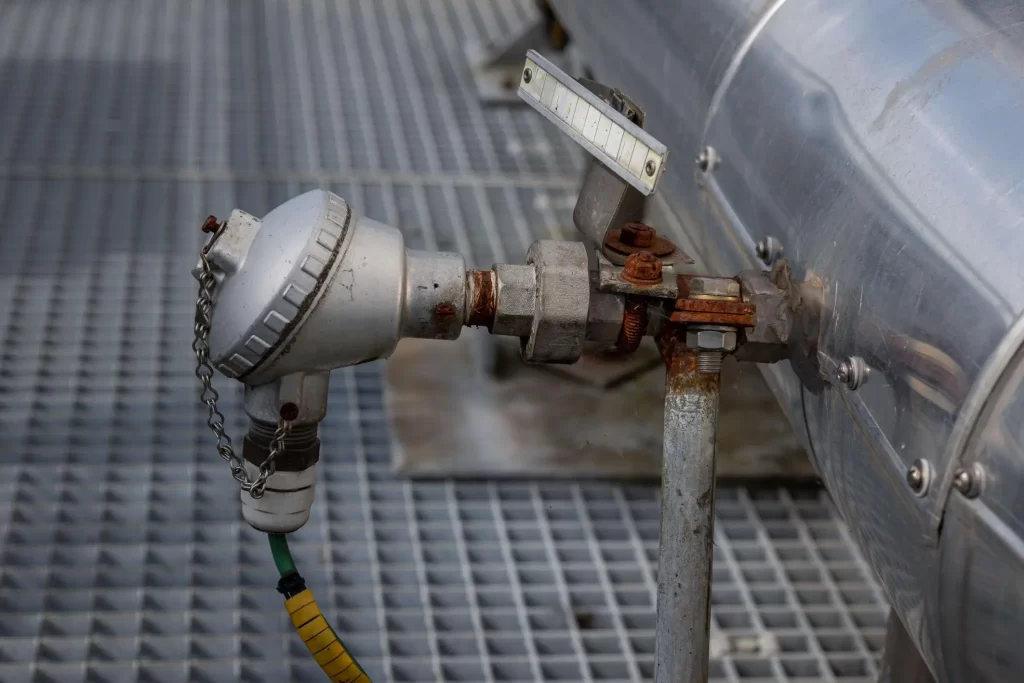
Key advantages include:
-
Wide Temperature Measurement Range: Suitable for a broad range of industrial temperature applications.
-
Fast Temperature Response: Helps monitor changing reactor temperatures.
-
Reliable Temperature Feedback: Supports continuous monitoring through temperature indicators and controllers.
-
Industrial Construction: Available with protective metal sheaths and customized mounting arrangements.
-
Easy Integration: Compatible with suitable temperature indicators, transmitters, PLCs, and control systems.
The Barton process commonly operates around 370°C to 480°C, although actual operating temperatures depend on the process configuration and production requirements. Therefore, the thermocouple should be selected according to the actual measurement location and temperature conditions.
3. Applications of K-Type Thermocouples in Litharge Manufacturing
K-Type Thermocouples can be used at different temperature measurement points throughout a lead oxide manufacturing facility.
Major applications include:
-
Barton Reactor Temperature Monitoring: Measuring the reactor operating temperature during lead oxidation.
-
Lead Melting Furnace: Monitoring molten lead heating conditions.
-
Reactor Chamber Temperature: Monitoring the temperature inside the processing chamber.
-
Heating System Monitoring: Measuring temperatures in associated heating equipment.
-
Industrial Temperature Control Panels: Providing temperature feedback to controllers and PLC-based systems.

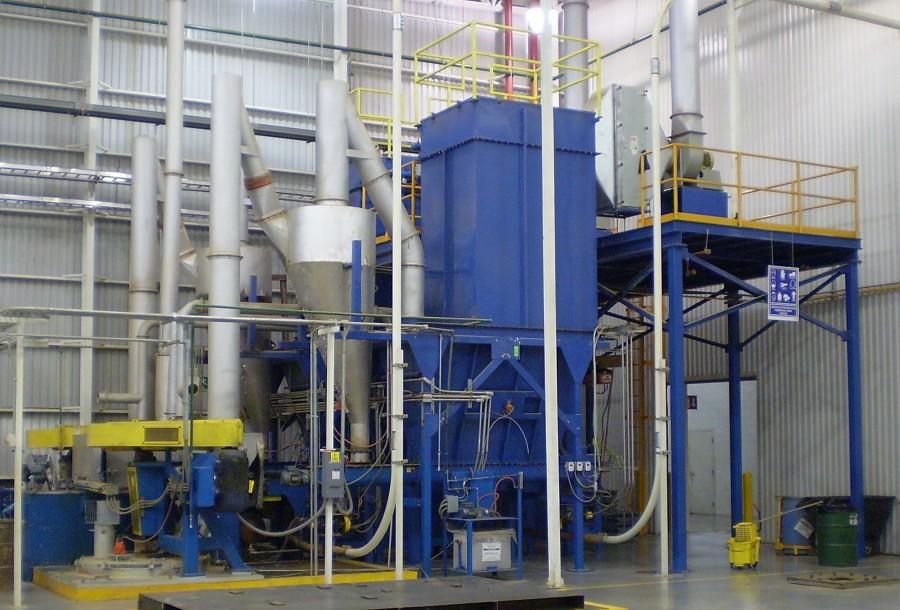
K Type Thermocouple for Accurate Temperature Monitoring in Litharge Barton Reactor Applications
4. Important Specifications for Selecting a K-Type Thermocouple
Choosing the correct thermocouple is essential for accurate measurement and reliable operation in industrial environments.
The following specifications should be considered when selecting a K-Type Thermocouple for a Litharge Barton Reactor.
|
Parameter |
Selection considerations |
|---|---|
|
Thermocouple Type |
Type K |
|
Sensor Element |
Chromel-Alumel |
|
Temperature Range |
As per actual process requirements |
|
Probe Material |
SS304 / SS316 / suitable alloy |
|
Probe Diameter |
As per installation requirement |
|
Insertion Length |
Based on measurement depth |
|
Junction Type |
Grounded / Ungrounded |
|
Connection |
Terminal head / cable / connector |
|
Mounting |
Threaded / Flanged / Customized |
|
Output |
Millivolt (mV) |
Important: The above is a selection guide, not a fixed standard specification. The probe material, diameter, length, and protection arrangement should be finalized after reviewing the reactor atmosphere, installation location, process temperature, and mechanical conditions.
5. How to Improve Thermocouple Performance in Barton Reactor Applications
Industrial thermocouples may experience harsh operating conditions, including temperature fluctuations, vibration, dust, and chemical exposure.
To improve measurement reliability, consider the following practices:
-
Select suitable sheath material according to the process atmosphere.
-
Ensure correct probe insertion depth for representative temperature measurement.
-
Use proper thermocouple extension cables with matching Type K polarity.
-
Check the terminal head and electrical connections regularly.
-
Perform periodic calibration and inspection.
-
Replace damaged or drifted sensors when necessary.
-
Ensure that the sensor is compatible with the connected temperature controller.
In lead oxide manufacturing, appropriate industrial ventilation, dust containment, and safe maintenance procedures are also important because lead oxide exposure presents occupational health risks.
6. Why Choose AAVAD Instrument for Industrial K-Type Thermocouples?
AAVAD Instrument Pvt. Ltd. provides industrial temperature measurement solutions for manufacturing and process industries.
With experience in industrial instrumentation since 2009, AAVAD offers temperature sensor solutions for demanding industrial applications.
Our temperature measurement product range includes:
-
K-Type Thermocouples
-
J-Type Thermocouples
-
RTD PT100 Sensors
-
Mineral Insulated Thermocouples
-
Industrial Temperature Sensors
-
Customized Thermocouple Assemblies
-
Temperature Transmitters and Indicators
We can assist with thermocouple selection based on application requirements, temperature range, probe dimensions, sheath material, and installation arrangement.
Looking for a K-Type Thermocouple for your Litharge Barton Reactor?
Contact AAVAD Instrument Pvt. Ltd. for industrial temperature measurement solutions and customized thermocouple requirements.
Website: https://aavadinstrument.com/
Email: hrg@aavadinstrument.com
Industry: Lead Oxide Manufacturing | Battery Manufacturing | Chemical Processing | Industrial Furnaces
Frequently Asked Questions (FAQs)
Q1. What is a K-Type Thermocouple used for in a Barton Reactor?
-> K-Type Thermocouple measures reactor operating temperature during the lead oxidation process, helping operators monitor and control process conditions.
Q2. What is the operating temperature of a Barton Reactor?
-> The commonly reported operating temperature range is approximately 370°C to 480°C. Actual temperatures depend on the reactor design and process parameters.
Q3. Which thermocouple is suitable for a Litharge Barton Reactor?
-> K-Type Thermocouple can be suitable, provided its sheath material, temperature rating, probe dimensions, and protection arrangement match the operating environment.
Q4. Can a K-Type Thermocouple be connected to a PLC?
-> Yes. K-Type Thermocouple can be connected through a compatible thermocouple input module or a suitable temperature transmitter.
Q5. Can thermocouple dimensions be customized?
-> Yes. Probe diameter, insertion length, sheath material, connection type, and mounting arrangement can be selected according to application requirements.