Description
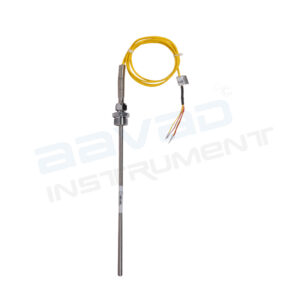
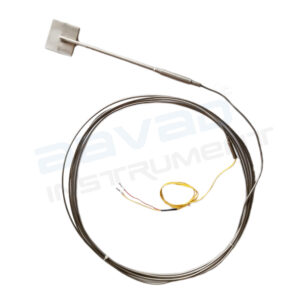
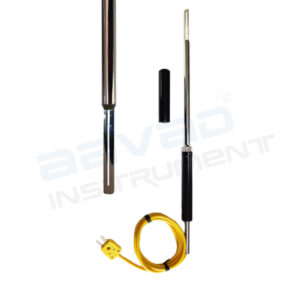
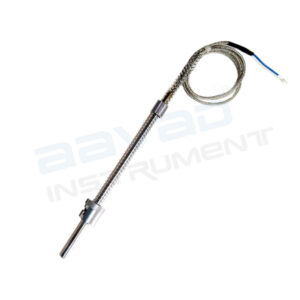
Autoclave Validation PT100 RTD Sensor (Model APED-6×30) is a duplex PT100 temperature sensor designed for temperature mapping, sterilizer validation, and qualification studies in pharmaceutical, medical device, healthcare, laboratory, and food processing applications. Its compact 30 mm SS316 sensing probe allows easy installation at multiple monitoring points within autoclaves and sterilization equipment.
The sensor features two independent Class A PT100 3-wire sensing elements housed within a single probe, allowing simultaneous temperature measurement through separate monitoring channels. This duplex configuration is well suited for validation studies where independent data acquisition, redundancy, or parallel monitoring is required during equipment qualification and routine validation.
Operating over a temperature range of -50°C to +400°C, the sensor is constructed with an SS316 stainless steel probe and a 3-meter Teflon/Teflon insulated cable, providing durability in demanding sterilization environments. It can be connected to validation systems, PLCs, data loggers, and temperature monitoring equipment compatible with PT100 inputs.
For facilities requiring documented measurement traceability, calibration services, including NABL-accredited calibration where applicable, can be provided on request.
Key Features
-
Duplex (3+3 Wire) Redundant Signal Architecture Contains two independent Class A PT100 elements inside one sheath for true signal cross-verification and zero-downtime backup during validation runs.
-
Compact 30mm Sensor Probe Length Ultra-short probe profile minimizes thermal mass, ensuring fast response time and easy placement inside cramped sterilizer trays, vials, or load packs.
-
Supports Strict IQ/OQ/PQ Validation Protocols Delivers the documented measurement accuracy required by US FDA, GMP, and ISO regulations for thermal cycle validation.
-
NABL-Traceable Calibration Available Optional multi-point calibration certificates ensure complete chain-of-custody traceability for audit compliance.
-
Steam-Tight & Moisture-Proof Teflon Wiring (TF/TF) 3-meter dual-Teflon extension cable prevents steam ingress, chemical degradation, and insulation breakdown during repeated autoclave cycles.
-
Class A Accuracy Precision Delivers tight tolerance ($pm 0.15^circtext{C}$ at $0^circtext{C}$) across an extended temperature range of -50°C to 400°C.
Applications
-
Pharmaceutical & Bio-Tech Autoclave Validation Chamber temperature mapping, load validation, and F0 calculation in steam sterilizers.
-
Medical Device & Equipment Sterilization Qualification testing of terminal sterilizers and ethylene oxide (EtO) / steam chambers.
-
Hospital & Clinical Laboratory Sterilizers Routine validation of benchtop and walk-in autoclaves for surgical tool and media preparation.
-
Food Industry Retort & Canning Validation Heat penetration studies in food retorts, pasteurization tunnels, and commercial packaging systems.
-
Regulated Thermal Chamber Mapping Multi-point validation in stability chambers, freeze dryers (lyophilizers), and incubators.
Datasheet
FAQs
1. What is an Autoclave Validation PT100 RTD Sensor?
An Autoclave Validation PT100 RTD Sensor is a high-precision PT100 Resistance Temperature Detector (RTD) used to verify, monitor, and document temperature performance during autoclave qualification, sterilizer validation, and temperature mapping studies. It provides accurate and repeatable temperature measurement to help ensure sterilization processes comply with regulatory and quality standards.
2. Why is a Duplex PT100 used for Autoclave Validation?
A Duplex PT100 RTD Sensor contains two independent sensing elements, allowing simultaneous temperature measurement through separate monitoring channels. This provides redundancy and enables parallel validation, data logging, or comparison between validation systems, improving reliability during critical qualification procedures.
3. What is Temperature Mapping in an Autoclave?
Temperature mapping is the process of measuring temperatures at multiple locations inside an autoclave or sterilizer to verify that the required sterilization conditions are achieved uniformly throughout the chamber. This procedure helps identify hot and cold spots and confirms consistent temperature distribution during validation.
4. What are IQ, OQ, and PQ in Autoclave Validation?
Installation Qualification (IQ) verifies that the autoclave is installed correctly according to manufacturer specifications. Operational Qualification (OQ) confirms that the equipment operates as intended across its specified operating range. Performance Qualification (PQ) demonstrates that the autoclave consistently achieves the required sterilization performance under routine operating conditions.