Description
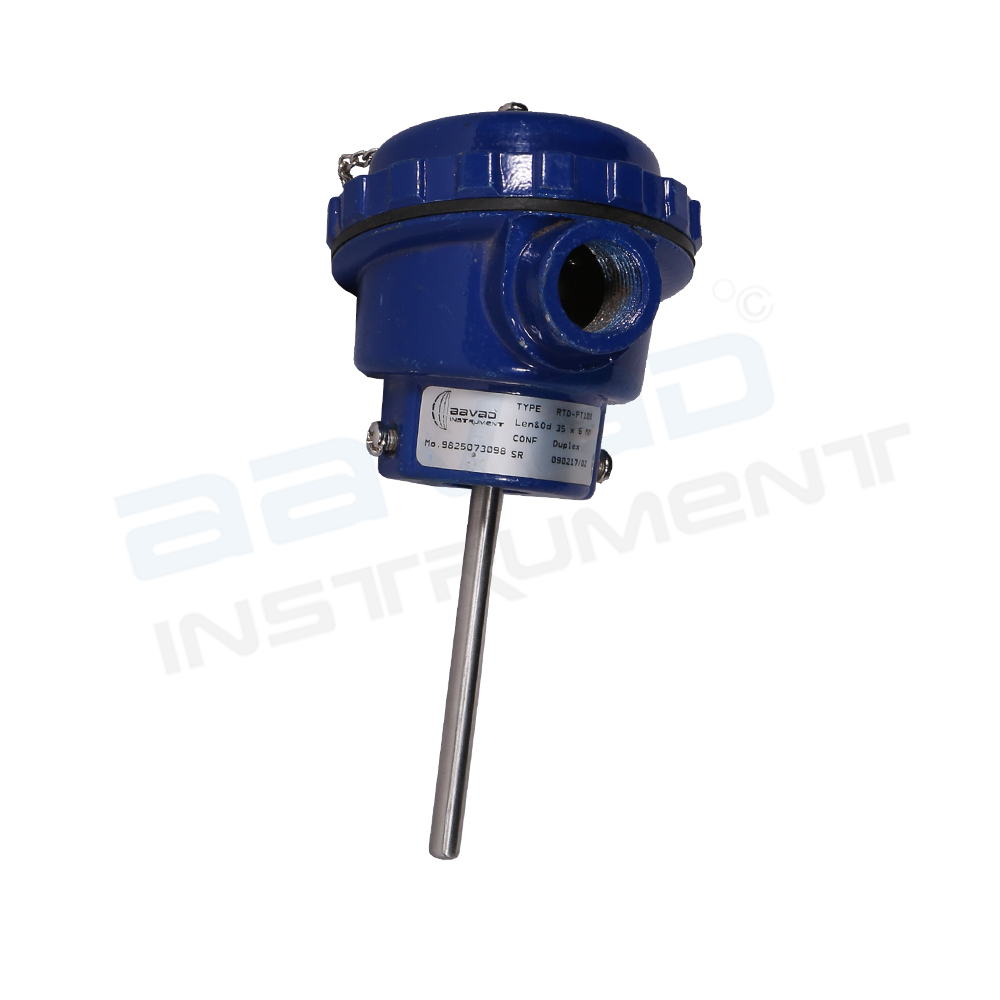
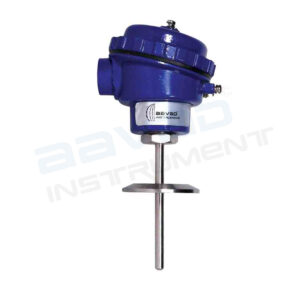
Heat Temperature Sensor (Model APWD-6×50) is a compact duplex PT100 RTD temperature sensor specifically engineered for accurate industrial heat and temperature measurement in applications with limited insertion depth. Featuring a short 50 mm insertion length, 6 mm OD SS316 stainless steel sheath, and two independent 3-wire PT100 sensing elements (3+3 wire), this Class B industrial temperature sensor provides reliable temperature measurement across a wide operating range of -50°C to +400°C. Its compact probe design makes it ideal for shallow tanks, thin-wall vessels, HVAC ducts, ovens, furnaces, and confined industrial equipment where conventional long temperature probes cannot be installed.
The duplex PT100 configuration enables two independent temperature signals from a single measurement point, allowing simultaneous connection to process controllers, indicators, data loggers, PLCs, DCS, or SCADA systems for control and monitoring. Compacted MgO insulation provides stable performance during repeated thermal cycling, while the rugged IP65 die-cast aluminium terminal head with threaded cap and security chain protects electrical terminations in demanding industrial environments. Manufactured by Aavad Instrument, the Model APWD-6×50 is an ideal short insertion RTD sensor for OEM equipment, process machinery, HVAC systems, heat-treatment equipment, and retrofit installations where restricted immersion depth and dual-signal temperature monitoring are critical requirements.
Key Features
-
Short 50 mm Insertion Geometry Ultra-compact probe length engineered specifically to fit into shallow tanks, thin-wall process vessels, and narrow duct systems where standard probes bottom out.
-
Dual Element Duplex Construction Houses two completely independent 3-wire Pt100 circuits within a single 50 mm probe body to deliver full dual-signal capability in confined spaces.
-
Rugged Weatherproof IP65 Head Durable die-cast aluminum connection enclosure protects internal terminal junctions from driving rain, industrial humidity, and ambient plant dust.
-
Compacted MgO Element Shielding High-purity compacted Magnesium Oxide insulation secures internal wiring to prevent physical failure during intense mechanical vibration or thermal expansion.
-
Corrosion-Resistant SS316 Sheath Heavy-duty marine-grade stainless steel body with a 6 mm outer diameter offers excellent resistance to pitting and chemical degradation.
-
Broad Spectrum Thermal Tracking Provides stable and highly predictable temperature measurements across a demanding industrial operational range spanning from -50°C to 400°C.
-
Secure Threaded Cap and Chain Industrial-grade enclosure cover paired with a robust metal safety chain prevents component loss and eases field maintenance during inspections.
Applications
-
Shallow Tanks and Thin-Wall Vessels Perfect for direct integration into compact processing tanks, low-volume fluid reservoirs, and thin-jacketed process equipment.
-
Confined-Space Machine Clearance Temperature monitoring inside small machinery footprints, localized hydraulic power packs, and tight structural enclosures.
-
Dual-Signal Space-Limited Points Execution of simultaneous automated PLC control and independent safety data logging from a single shallow pipe tapping.
-
Furnace and Heat-Treatment Equipment Installation into shallow-access industrial ovens, compact curing chambers, and laboratory heat-treatment units.
-
HVAC Ducting Temperature Monitoring Precise thermal profiling of high-velocity airflow loops and air-handling distribution ductwork without obstructing fluid pathways.
-
Retrofit into Existing Shallow Ports Drop-in maintenance swapping for aged or failed instruments inside legacy process ports where standard-length probes cannot safely fit.
Datasheet
FAQs
1. What is a Heat Temperature Sensor and what temperature range does it cover?
A Heat Temperature Sensor is a PT100 Resistance Temperature Detector (RTD) designed for accurate monitoring of high-temperature industrial processes. Aavad’s Heat Temperature Sensor (Model APWD-6×50) is a duplex PT100 RTD with Class B accuracy, operating over a temperature range of -50°C to +400°C. It is engineered for continuous exposure to elevated process temperatures in demanding industrial environments.
2. What is the difference between Class A and Class B accuracy on this Heat Temperature Sensor?
Class A PT100 RTDs provide a tighter measurement tolerance of approximately ±0.15°C at 0°C, making them suitable for high-precision applications. Class B PT100 RTDs, as used in this model, have a tolerance of approximately ±0.30°C at 0°C and offer a more cost-effective solution for general industrial temperature monitoring where reliable performance is required without the need for maximum precision.
3. What protection does the Heat Temperature Sensor’s head provide?
The sensor features a die-cast aluminum protection head with a threaded cap and retaining chain, rated IP65. It also includes a ¾” ET cable entry, providing excellent protection against dust, moisture, and harsh industrial environments while safeguarding the internal nickel-plated ceramic terminal block.
4. What is the standard probe size of Aavad’s Heat Temperature Sensor?
The standard configuration (Model APWD_6X50) features a 6 mm outer diameter (OD) probe with a 50 mm insertion length below the protection head. The sensor uses compacted Magnesium Oxide (MgO) insulation and a nickel-plated ceramic terminal block in a duplex 3-wire + 3-wire configuration for dependable industrial temperature measurement.
5. What applications is this Heat Temperature Sensor designed for?
Aavad’s Heat Temperature Sensor is widely used in industrial temperature control, laboratory measurement systems, HVAC equipment, process automation, manufacturing plants, and general process monitoring applications, where stable, repeatable, and reliable temperature measurement across a wide operating range is required.