Description
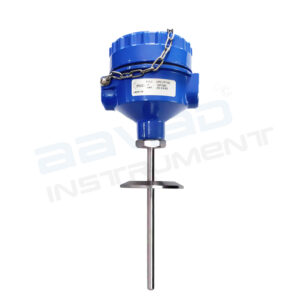
Sanitary RTD Sensor (Model APWS-Tri) is a hygienic PT100 temperature sensor designed for accurate process temperature measurement in applications where cleanliness, product quality, and easy cleaning are essential. Featuring a Simplex 3-wire PT100 sensing element, a durable 1-inch Tri-Clamp (Tri-Clover) process connection, a corrosion-resistant SS316 stainless steel probe, and a robust IP65 aluminium terminal head, this sanitary RTD provides dependable temperature measurement across an operating range of -50°C to +250°C. The hygienic Tri-Clamp connection allows quick installation and removal while supporting cleaning procedures commonly used in food processing, dairy production, beverage manufacturing, pharmaceutical processing, biotechnology, and other sanitary industries.
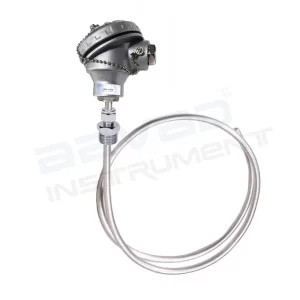
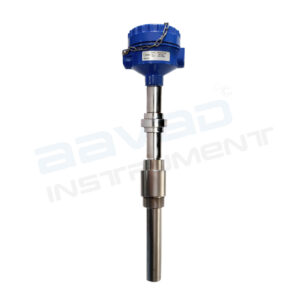
Designed for non-hazardous hygienic environments, this sanitary RTD combines reliable temperature measurement with installation flexibility through multiple wire configurations, simplex or duplex sensing options, and customizable process connections. The smooth stainless steel construction and hygienic process fitting make the sensor suitable for applications requiring regular cleaning and product-contact hygiene. Manufactured by Aavad Instrument, this sanitary PT100 RTD sensor integrates with compatible temperature transmitters, PLCs, DCS, SCADA systems, controllers, and industrial automation platforms, making it an ideal solution for hygienic process monitoring, quality control, and production automation.
Key Features
-
Hygienic Tri-Clamp Process Connection Features a standard 1-inch Tri-Clover connection that creates a smooth internal pipe profile to prevent product buildup and biological growth.
-
Premium SS316 Stainless Steel Sheath Built out of durable, heavy-walled stainless steel to combat chemical corrosion, pitting, and material fatigue in food-contact zones.
-
Hygienic Construction Engineered with polished, crevice-free surfaces that facilitate routine spray washings and thorough chemical cleaning procedures.
-
Broad Thermal Range Tracking Delivers highly repeatable tracking across a versatile $-50^circtext{C}$ to $+250^circtext{C}$ span, covering deep cooling loops to high-temperature processing.
-
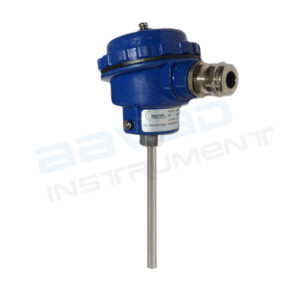
Weatherproof IP65 Aluminum Head Rugged die-cast aluminum enclosure seals out external processing moisture, splashing water, and industrial particulates.
-
Simplex & Duplex Assembly Flexibility Available in both single and dual-circuit configurations to easily provide secondary backup signals or auxiliary data outputs.
-
Flexible 2, 3, or 4-Wire Configurations Configurable in 2-wire, 3-wire, or 4-wire layouts to match varying requirements for distance-based lead wire resistance compensation.
-
Universal Automation Compatibility Seamlessly interfaces with head-mounted or panel-mounted temperature transmitters, PLCs, DCS networks, SCADA setups, and digital controllers.
Applications
-
Dairy and Milk Processing Facilities Continuous thermal profiling within raw milk receiving lines, storage silos, yogurt pasteurizers, and cheese processing vats.
-
Food Processing and Preparation Lines High-integrity measurement inside ingredient blending tanks, cooking jackets, cooling channels, and prepared food lines.
-
Beverage Production and Bottling Systems Direct-stream tracking inside microbrewery fermentation tanks, syrup blending systems, soft drink lines, and high-speed bottling lines.
-
Pharmaceutical and Biotech Cleanrooms Reliable temperature monitoring in non-classified hygienic production environments, purified water loops, and chemical prep skids.
-
CIP and SIP Sanitation Monitoring High-accuracy tracking at automated clean-in-place headers to ensure chemical solutions and steam cycles hit target sterilization temperatures.
-
Sanitary Tank and Pipeline Automation Easy integration into storage vessels, mixing tanks, and product transfer lines via universal analog input cards on PLCs and DCS loops.
Datasheet