Description
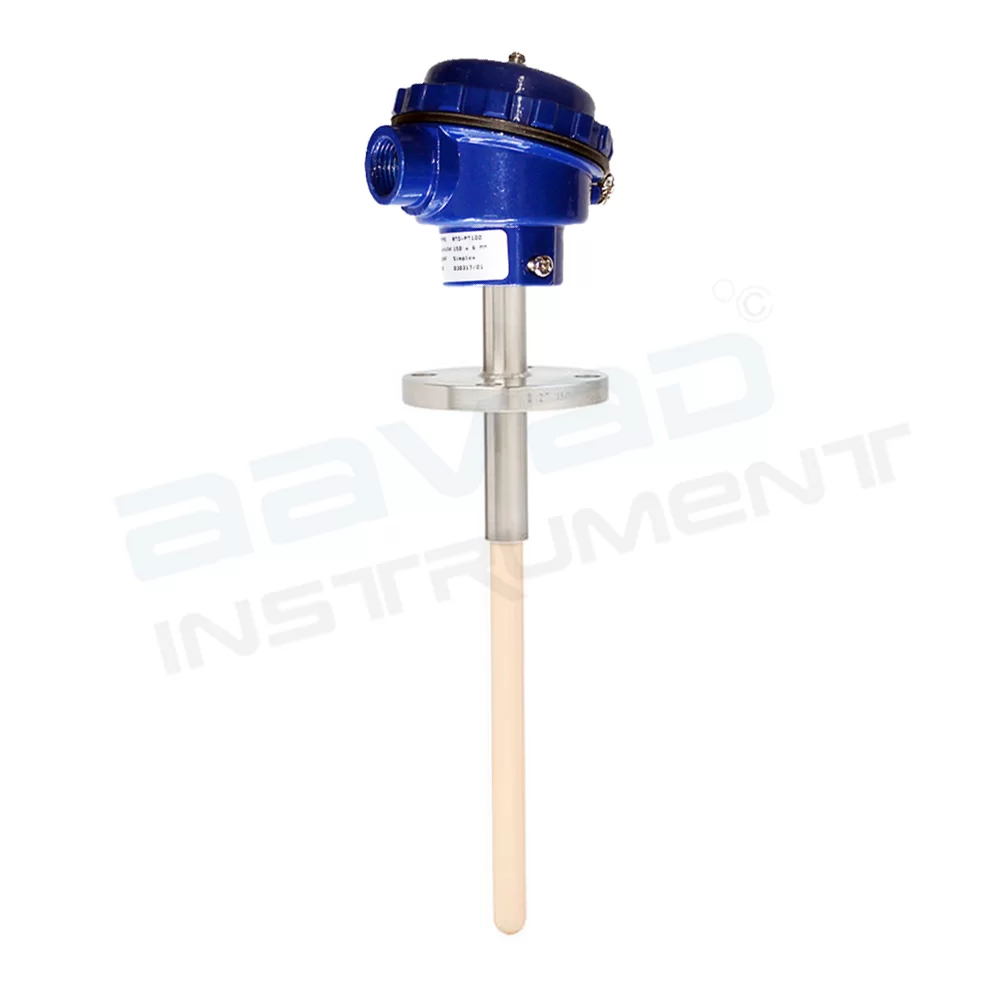
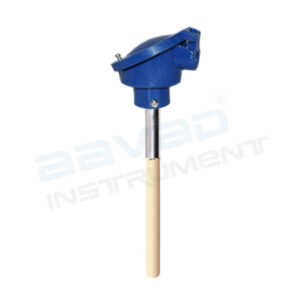
The Aavad Instrument Model ASWS High Temperature Thermocouple is a Type S (Platinum-10% Rhodium / Platinum) ceramic tube thermocouple engineered for continuous temperature measurement up to 1500°C in industrial furnaces, kilns, reactors, glass melting units, and metallurgical processing equipment.
The sensing element is protected by a double ceramic protection system consisting of a 99.7% high-purity alumina (Ker-710) twin-hole inner tube enclosed within a larger high-purity alumina outer protection tube. This dual-layer ceramic construction shields the noble metal element from mechanical damage, contamination, and aggressive furnace conditions while maintaining excellent electrical insulation at elevated temperatures.
An Inconel 600 holding tube provides additional mechanical support outside the hot zone, while the weatherproof die-cast aluminium terminal head (IP65) protects electrical connections from dust and moisture in industrial environments. A fixed 2-inch 300# RF welded flange enables secure installation on large furnaces, reactors, and process vessels.
Because Type S thermocouples use platinum-based conductors, they should operate in oxidizing or inert atmospheres. Exposure to strongly reducing atmospheres may contaminate the platinum-rhodium element, permanently affecting calibration accuracy and reducing sensor life. Selecting the correct thermocouple therefore depends not only on temperature but also on furnace atmosphere and process chemistry.
When industrial processes operate above 1200°C, conventional base-metal thermocouples such as K, J, N, and T Type gradually lose thermoelectric stability due to oxidation, grain growth, and material degradation. These effects increase measurement drift and reduce long-term accuracy. For continuous operation in extreme-temperature environments, noble metal thermocouples manufactured from platinum and platinum-rhodium alloys provide significantly greater stability and service life.
Key Features
-
Calibrated Noble Metal Type S Elements Platinum/Platinum-Rhodium 10% construction ensures minimal drift and high repeatability up to 1500°C continuous.
-
Double Ker-710 Alumina Sheath Protection Impervious 99.7% high-purity alumina inner ($15 times 10 text{ mm}$) and outer ($24 times 18 text{ mm}$) ceramic tubes shield wires from hot gas ingress.
-
Heavy-Duty 2″ 300# RF Welded Mounting Flange Provides a pressure-rated, gas-tight mechanical connection for large industrial furnaces and reactor walls.
-
Inconel 600 Metallic Holding Tube Supports the long ceramic sheath at the mounting point, absorbing structural bending stresses near the outer shell.
-
Extended 1750 mm Immersion Reach Deep insertion length accommodates thick refractory furnace walls and large vessel crowns.
-
Weatherproof IP65 Terminal Enclosure Die-cast aluminum connection head protects internal terminals against rain, dust, and washdown spray.
-
Self-Powered Passive Signal Loop Generates its own millivolt signal, requiring zero external excitation voltage at the measurement point.
Applications
-
Glass Melting Tanks and Forehearths Continuous monitoring of molten glass, forehearth channels, and furnace crown temperatures.
-
Steel, Refining, and Non-Ferrous Foundries Thermal regulation in reheating furnaces, tundishes, and molten metal processing vessels.
-
Ceramic, Kiln, and Refractory Manufacturing High-accuracy firing control inside high-temperature tunnel kilns and sintering furnaces.
-
Petrochemical and Chemical Processing High-heat temperature acquisition inside cracking furnaces, gasifiers, and incinerators.
-
Calibration Laboratories and R&D Test Facilities Serving as high-precision reference standards for calibrating base-metal industrial thermocouples.
Datasheet
FAQs
1. What is a High Temperature Thermocouple?
A High Temperature Thermocouple is an industrial temperature sensor designed for continuous operation above the limits of conventional base-metal thermocouples. It typically uses noble metal sensing elements such as Type S, Type R, or Type B, protected by high-purity ceramic tubes for accurate and reliable temperature measurement in furnaces, kilns, and heat treatment applications operating between 1200°C and 1700°C.
2. Why is a Type S Thermocouple used above 1200°C?
Above approximately 1200°C, base-metal thermocouples such as Type K may experience increased drift and reduced long-term stability. Type S Thermocouples, manufactured from platinum-rhodium and platinum, provide superior accuracy, excellent oxidation resistance, and outstanding measurement stability at elevated temperatures, making them ideal for continuous furnace operation.
3. What is the maximum temperature for this Thermocouple?
The ASWS Type S High Temperature Thermocouple is designed for continuous operation up to 1500°C, depending on the furnace atmosphere, installation method, and overall process conditions. Proper ceramic protection and installation help maximize sensor life and measurement accuracy.
4. Why does a Type S Thermocouple require an oxidizing atmosphere?
Type S Thermocouples use platinum-based conductors that perform best in oxidizing or inert atmospheres. Strongly reducing atmospheres can contaminate the platinum elements, leading to calibration drift, reduced measurement accuracy, and shorter sensor service life.
5. Why is Ceramic Tube protection required?
High-purity ceramic protection tubes electrically insulate the platinum sensing wires while protecting them from contamination, mechanical damage, thermal shock, and direct exposure to extreme furnace temperatures. Ceramic protection significantly improves reliability and extends thermocouple service life in high-temperature industrial applications.
6. What is a Twin-Hole Ceramic Tube?
A Twin-Hole Ceramic Tube contains two individually insulated channels—one for each thermocouple conductor. This design prevents electrical contact between the conductors, maintains insulation integrity, and ensures accurate and stable temperature measurement throughout the sensor’s operating life.
7. What is Double Ceramic Protection?
Double Ceramic Protection consists of an inner twin-hole ceramic insulator enclosed within an outer ceramic protection tube. This dual-layer construction increases mechanical strength, improves resistance to thermal shock, and provides additional protection against harsh furnace conditions, resulting in longer operational life.
8. Which industries use High Temperature Thermocouples?
High Temperature Thermocouples are widely used in glass manufacturing, steel plants, heat treatment furnaces, ceramic industries, cement plants, petrochemical processing, power generation, research laboratories, aerospace testing, refractory manufacturing, and other high-temperature industrial processes requiring accurate and stable temperature measurement.
9. What is the difference between Type S and Type K Thermocouples?
Type K Thermocouples are economical and commonly used for temperatures up to approximately 1200°C. In comparison, Type S Thermocouples offer higher temperature capability, superior long-term stability, lower drift, and improved measurement accuracy, making them the preferred choice for demanding furnace, kiln, and laboratory applications above 1200°C.
10. Can this High Temperature Thermocouple be customized?
Yes. Aavad Instrument Pvt. Ltd. High Temperature Thermocouples are manufactured to suit specific industrial requirements. We offer customized insertion lengths, flange sizes, ceramic protection tubes, single or double ceramic protection, sheath configurations, thermocouple calibrations (Type S, R, and B), terminal heads, and process connections to ensure optimum performance in high-temperature applications.