Description
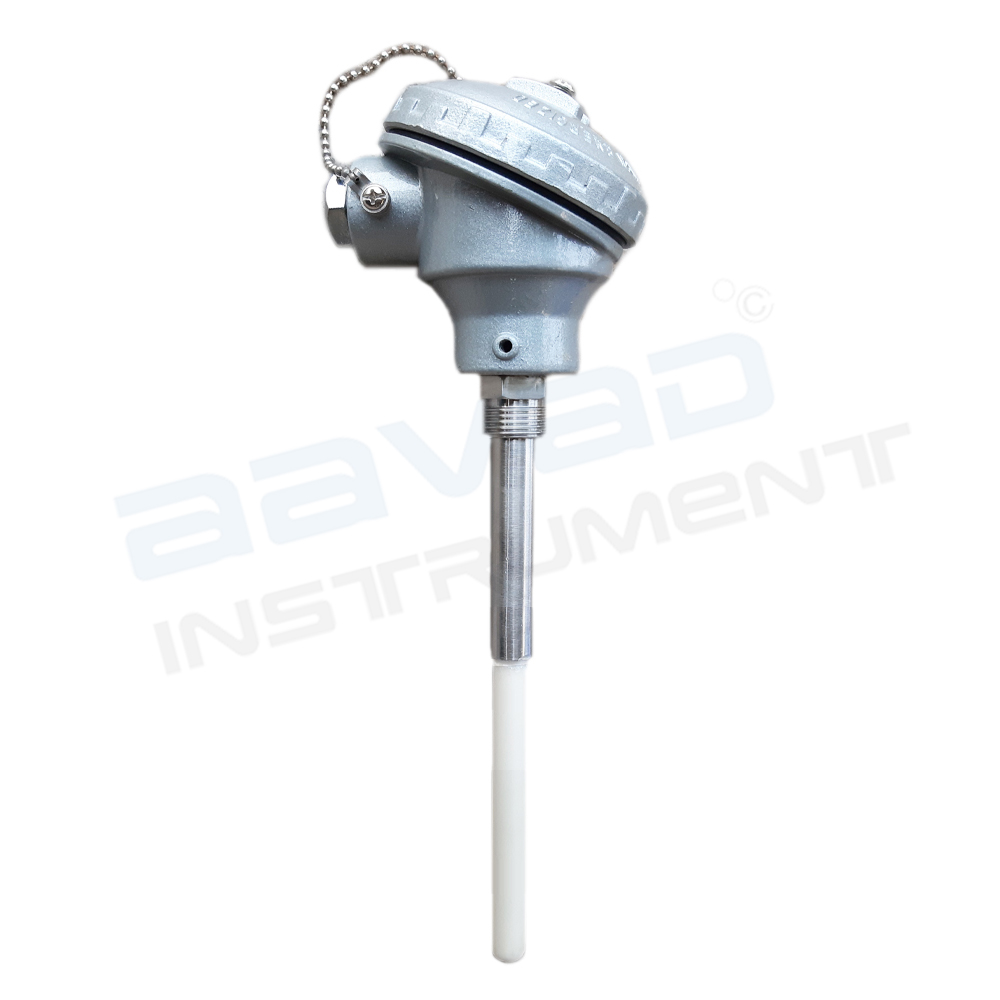
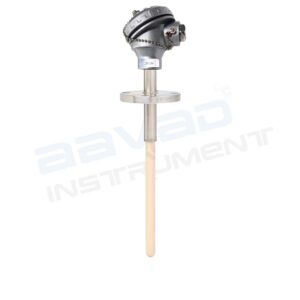
The Aavad Instrument Model ARIS Furnace Crown Thermocouple is a Type R ceramic tube thermocouple engineered specifically for continuous crown temperature measurement in glass manufacturing. Rather than serving as a general-purpose furnace sensor, this configuration is optimized for the installation geometry, thermal conditions, and operational requirements of furnace crown monitoring.
The furnace crown is one of the hottest and most critical zones in a glass melting furnace. Positioned above the molten glass bath, the refractory crown is continuously exposed to extreme temperatures that directly influence furnace efficiency, refractory life, and overall production stability. Even relatively small temperature deviations can increase fuel consumption, reduce glass quality, or accelerate refractory wear, leading to costly maintenance and unplanned shutdowns.
The thermocouple incorporates a Platinum-13% Rhodium / Platinum (Type R) sensing element capable of accurate temperature measurement up to 1450°C. Compared with many base-metal thermocouples, Type R offers superior long-term stability and low measurement drift during continuous high-temperature operation, making it well suited to the demanding environment of glass melting furnaces.
To protect the noble metal sensing element, the thermocouple uses a 450 mm high-purity Ker-710 alumina ceramic protection tube, providing excellent electrical insulation while minimizing contamination from the furnace atmosphere. The ceramic assembly is supported by a 21 mm SS310 holding tube, delivering mechanical strength outside the hot zone without compromising thermal performance.
The assembly is completed with a weatherproof die-cast aluminium terminal head (IP67), protecting electrical connections from dust and moisture while ensuring dependable operation in industrial environments.
Key Features
-
Purpose-Built Glass Crown Immersion Geometry Compact 450 mm length specifically dimensioned for direct insertion into crown refractory block thermo-wells.
-
Noble Metal Type R Sensing Element ($text{Pt-13%Rh / Pt}$) Higher EMF signal output and superior long-term calibration stability compared to Type S sensors at high temperatures.
-
Impervious Ker-710 Alumina Sheath (99.7% $text{Al}_2text{O}_3$) Non-porous ceramic tube prevents volatile glass batch vapors (alkalis, borates, silica) from contaminating the platinum wires.
-
Refractory Life Extension & Energy Optimization Enables precise temperature regulation to prevent crown silica drip while maximizing fuel-to-melt efficiency.
-
Rugged 21 mm SS310 Support Holding Sleeve High-chromium steel holding tube provides mechanical support and strain relief near the outer furnace steelwork.
-
Weatherproof IP67 Terminal Enclosure Heavy-duty die-cast aluminum connection head seals wiring terminals against combustion dust, rain, and heat exposure.
-
Self-Powered Passive Millivolt Loop Converts crown thermal energy directly into an electrical signal without requiring external power supplies.
Applications
-
Container Glass Melting Furnaces Crown temperature regulation in glass bottle and jar production melters.
-
Float Glass and Automotive Glass Plants High-accuracy crown thermal profiling across float glass melting tanks and refining zones.
-
Specialty and Pharmaceutical Glass Melters Continuous crown monitoring in borosilicate glass, tubing, and technical glass furnaces.
-
Regenerator and Checker Crown Monitoring Temperature acquisition across furnace regenerator arches and checkerboard brick crowns.
-
High-Temperature Refractory Testing Benches Thermal verification of high-alumina, silica, and AZS refractory materials under load.
Datasheet
FAQs
1. What is a Furnace Crown Thermocouple?
A Furnace Crown Thermocouple is a high-temperature industrial sensor installed in the refractory crown (roof) of a glass melting furnace to continuously monitor crown temperature. It provides accurate real-time temperature measurement, helping operators maintain stable furnace conditions, protect refractory materials, improve energy efficiency, and ensure consistent glass production.
2. Why is Crown Temperature important in a Glass Furnace?
The furnace crown operates at some of the highest temperatures within a glass melting furnace. Excessive crown temperatures can accelerate refractory erosion, shorten furnace campaign life, and increase maintenance costs, while temperatures that are too low may reduce melting efficiency, increase fuel consumption, and negatively affect glass quality. Continuous crown temperature monitoring helps optimize furnace performance and prolong refractory life.
3. Why is an R Type Thermocouple used for Furnace Crown measurement?
R Type Thermocouples, manufactured using platinum-rhodium and platinum conductors, offer outstanding long-term stability, high measurement accuracy, and excellent resistance to high-temperature drift. With reliable operation up to approximately 1450°C, they are ideally suited for continuous temperature monitoring in glass furnace crown applications and other demanding high-temperature industrial processes.
4. What happens if the Furnace Crown overheats?
Excessive furnace crown temperatures can accelerate refractory wear, increase the risk of structural damage, shorten the overall furnace campaign, and lead to costly maintenance or unplanned shutdowns. Accurate temperature monitoring using a high-quality Furnace Crown Thermocouple helps operators detect overheating early, maintain safe operating conditions, and extend furnace service life.
5. Why Choose Aavad Instrument Furnace Crown Thermocouples?
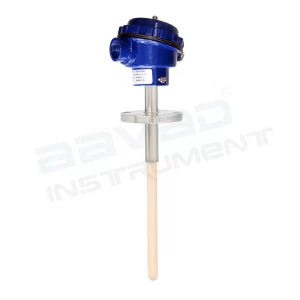
Aavad Instrument Pvt. Ltd. Furnace Crown Thermocouples are precision-engineered for continuous operation in demanding glass furnace environments. Manufactured with premium R Type noble metal sensing elements, high-quality ceramic protection tubes, and robust industrial construction, our thermocouples deliver exceptional accuracy, long-term stability, and reliable performance at elevated temperatures. We also offer customized insertion lengths, ceramic protection configurations, flange designs, and process connections to meet the specific requirements of glass manufacturing and other high-temperature industries.