N-Type Thermocouple Extension Cable | Nicrosil/Nisil

N-Type Thermocouple Extension Cable | Nicrosil/Nisil
| Parameter | Specification |
|---|---|
| Color | Iec |
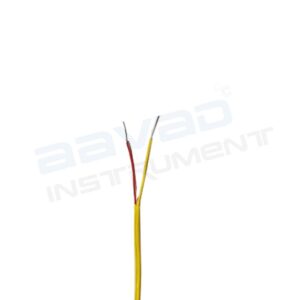
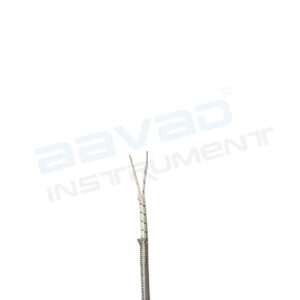
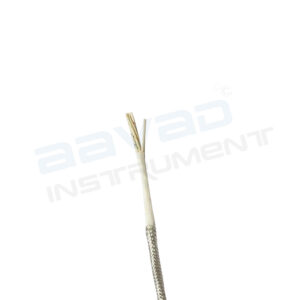
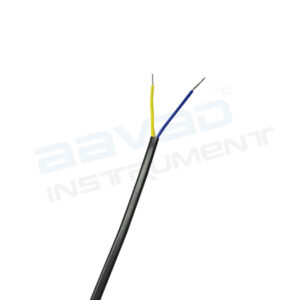
| Insulation | Glass fibre with st. st. braided |
| Packing type | Spool |
| Number of core | 2 |
| 1.5 Sq. mm N Type Thermocouple Ext. Cable | Thermocouple grade wire is wire that is used to make the sensing point (or probe part) of the thermocouple. Extension grade wire is only used to extend a thermocouple signal from a probe back to the instrument reading the signal. The extension grade wire typically will have a lower ambient temperature limit in which the wire may be used. |
| Type N Thermocouple (Nicrosil / Nisil) | The Type N shares the same accuracy and temperature limits as the Type K. The type N is slightly more expensive. The type N has better repeatability between 572F to 932F (300C to 500C) compared to the type K. |
| Type N Temperature Range | Maximum continuous operating temperature: up to 2,300F (1,260C)Type N Thermocouple Grade WireShort term use: 2,336F (1,280C)Thermocouple grade wire, -454 to 2300F (-270 to 1,260C)Extension wire, 32 to 392F (0 to 200C) |
Description
The N-Type Thermocouple Extension Cable is designed to accurately transmit the millivolt signal from N-Type (Nicrosil/Nisil) thermocouples to temperature controllers, PLCs, DCS systems, recorders, and industrial monitoring equipment while maintaining signal integrity over extended cable runs. Unlike thermocouple-grade wire, which forms the sensing junction and is exposed directly to process temperatures, this extension-grade cable is engineered specifically for signal transmission between the thermocouple sensor and the measuring instrument. Its 0°C to 200°C ambient operating range reflects the environmental conditions experienced by the cable itself, while the connected N-Type thermocouple can measure process temperatures up to 1260°C continuously and 1280°C for short-duration exposure.
Manufactured using Nicrosil and Nisil extension-grade conductors, the cable offers excellent thermoelectric compatibility with N-Type thermocouples and provides superior long-term stability compared to K-Type systems in demanding industrial environments.