Description
Glass melting furnaces operate continuously under some of the most demanding thermal conditions found in industrial manufacturing. Temperatures within the melting chamber, combustion zone, and furnace crown commonly range from 1500°C to 1700°C, requiring temperature sensors capable of maintaining accuracy and stability throughout extended operating campaigns. Reliable temperature measurement is essential for controlling glass quality, optimizing fuel consumption, and protecting expensive refractory structures.
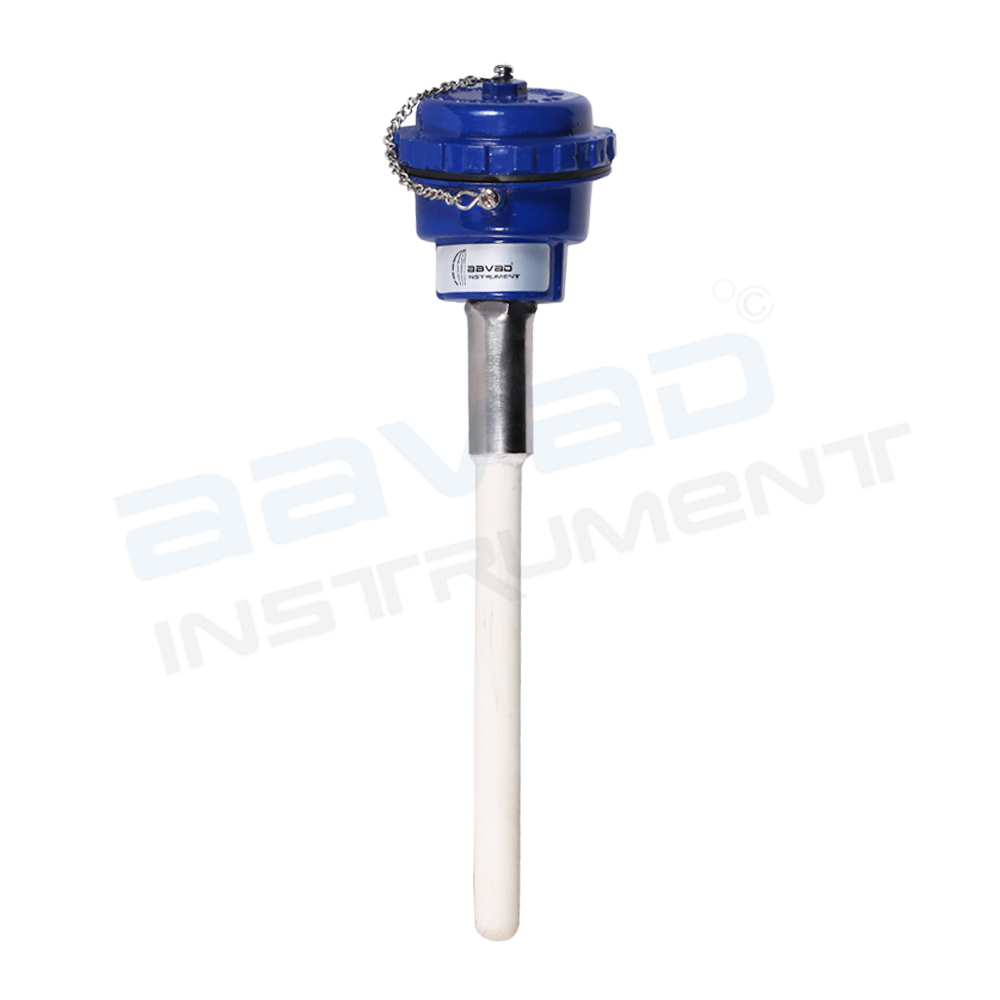
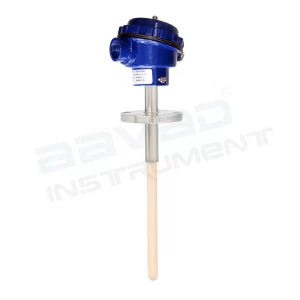
The Aavad Instrument Model ABWS Glass Furnace Thermocouple is a B Type ceramic tube thermocouple specifically engineered for continuous temperature measurement in glass manufacturing applications. It uses a Platinum-30% Rhodium / Platinum-6% Rhodium (Pt30%Rh/Pt6%Rh) sensing element, providing the high-temperature capability required for continuous operation at temperatures up to 1700°C. Compared with Type R and Type S thermocouples, Type B is the preferred choice for the highest-temperature glass furnace applications because of its excellent long-term stability under sustained extreme heat.
The sensing element is protected by a double ceramic protection system consisting of high-purity Ker-710 alumina inner and outer protection tubes. This design electrically insulates the platinum-rhodium conductors while shielding them from contamination, thermal shock, and mechanical damage. An SS310 holding tube provides structural support outside the hot zone, while a weatherproof die-cast aluminium terminal head with IP65 protection protects electrical connections in industrial environments.
Accurate furnace temperature measurement helps maintain stable melting conditions, reduce fuel consumption, improve glass quality, and extend refractory campaign life by preventing both overheating and underheating of critical furnace zones.
Key Features
-
Purpose-Built Glass Furnace Operating Range (1500°C to 1700°C) Specifically engineered for continuous service in high-temperature glass melting chambers and crowns.
-
Dual-Rhodium Type B Thermoelement ($text{Pt-30%Rh / Pt-6%Rh}$) Eliminates pure platinum wire softening to prevent grain growth and calibration drift at extreme temperatures.
-
Impervious Double Ker-710 Ceramic Protection Assembly High-purity 99.7% alumina inner ($12 times 8 text{ mm}$) and outer ($19 times 14 text{ mm}$) ceramic tubes block corrosive alkali glass vapors.
-
Refractory Protection & Energy Optimization Enables precise thermal control to prevent refractory silica dripping while optimizing fuel consumption.
-
Rugged 700 mm Ceramic Sheath Footprint Sized to penetrate thick refractory crowns, melter walls, and combustion zones.
-
SS310 Support Holding Sleeve High-chromium steel holding tube absorbs structural bending stress near the outer furnace casing.
-
Weatherproof IP65 Terminal Junction Enclosure Sealed die-cast aluminum junction head protects internal terminals from dust, steam, and ambient heat.
Applications
-
Container Glass Melting Tanks and Melter Crowns Continuous high-heat monitoring across container glass furnace crowns and melting zones.
-
Float Glass and Automotive Glass Melters Precise thermal profiling in float glass refining chambers, melter roofs, and regenerator arches.
-
Specialty, Borosilicate, and Technical Glass Furnaces Temperature acquisition in high-temperature specialty glass melting units above 1500°C.
-
Glass Furnace Combustion Zones and Doghouses Monitoring burner flame regions, batch charging zones, and flue gas exits.
-
High-Temperature Refractory Testing and Kilns Thermal evaluation of high-alumina and AZS refractory materials under extreme heat.
Datasheet
FAQs
1. What is a Glass Furnace Thermocouple?
A Glass Furnace Thermocouple is a high-temperature industrial temperature sensor specifically designed for continuous temperature measurement inside glass melting furnaces. It is used to monitor critical areas such as the melting chamber, combustion zone, furnace crown, and refining section, ensuring accurate process control, consistent glass quality, and safe furnace operation under extreme temperatures.
2. Why is a B Type Thermocouple used in Glass Furnaces?
Many glass melting furnaces operate between 1500°C and 1700°C, where B Type Thermocouples offer outstanding long-term stability, excellent resistance to high-temperature drift, and reliable continuous measurement. Manufactured from platinum-rhodium alloys, they are ideal for prolonged operation in demanding glass manufacturing environments.
3. What is the maximum operating temperature?
The ABWS Glass Furnace Thermocouple is designed for continuous operation up to 1700°C, depending on the furnace atmosphere, installation method, and process conditions. Proper installation with high-quality ceramic protection helps maximize service life and measurement accuracy.
4. Why is Double Ceramic Protection required?
Double Ceramic Protection consists of an inner ceramic insulator and an outer ceramic protection tube. This dual-layer construction electrically insulates the platinum-rhodium sensing element while protecting it from contamination, thermal shock, mechanical damage, and direct exposure to extreme furnace temperatures, resulting in improved reliability and extended sensor life.
5. Which areas of a Glass Furnace are monitored?
Glass Furnace Thermocouples are commonly installed in critical furnace locations, including:
• Melting Chamber
• Furnace Crown
• Combustion Zone
• Glass Refining Area
• High-Temperature Process Zones
Continuous monitoring of these areas helps maintain stable furnace operation and consistent glass quality.
6. How does accurate Furnace Temperature improve Glass Production?
Accurate furnace temperature monitoring helps maintain uniform glass melting, improve glass homogeneity, reduce fuel consumption, optimize melting efficiency, minimize production defects, and extend the service life of refractory materials. Reliable temperature control also supports consistent product quality and reduces overall operating costs.
7. Can a Glass Furnace Thermocouple be customized?
Yes. Aavad Instrument Pvt. Ltd. Glass Furnace Thermocouples are manufactured to meet specific glass industry requirements. We offer customized insertion lengths, ceramic protection tubes, single or double ceramic protection, flange sizes, process connections, terminal head configurations, and Type B, Type S, or Type R noble metal sensing elements for reliable performance in demanding high-temperature furnace applications.